

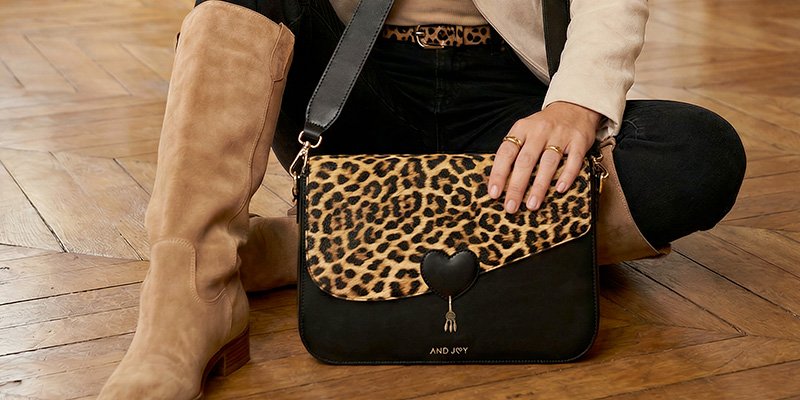
A 9 AM business meeting, an 8 PM dinner, and no desire to change your entire wardrobe in between. That's exactly where an interchangeable bag makes perfect sense. More flexible than a classic bag, more desirable than a simple practical accessory, it keeps up with your pace, your desires, and your style without forcing you to choose between flair and functionality.
True luxury today isn't about accumulating; it's about composing. A bag that evolves with your day, your outfit, or your mood meets a very current expectation: consuming better, asserting your style, and maintaining true freedom in how you dress. It's not a minor detail. It's a different way of thinking about fashion.
This format is so popular because it solves a very real problem. Many women want an elegant everyday bag that can go from the office to the weekend, from a minimalist look to a bolder outfit. But a fixed model quickly reaches its limits. It works with one outfit, one season, or one occasion, then gets relegated to the closet.
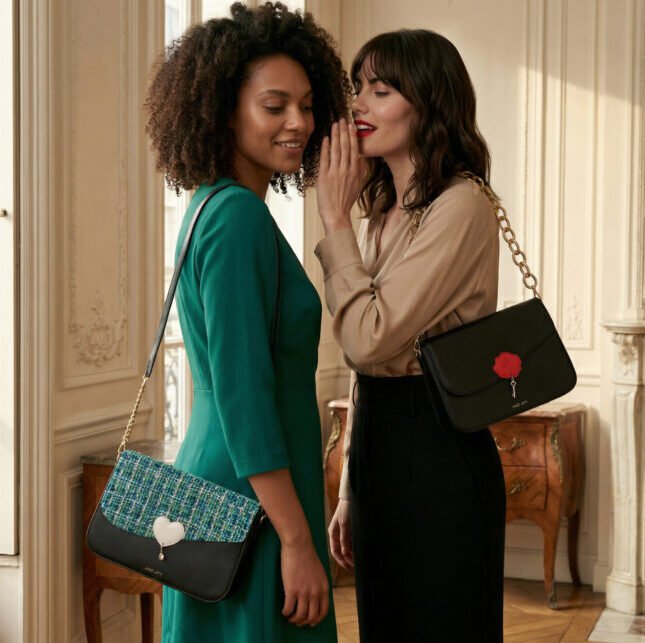
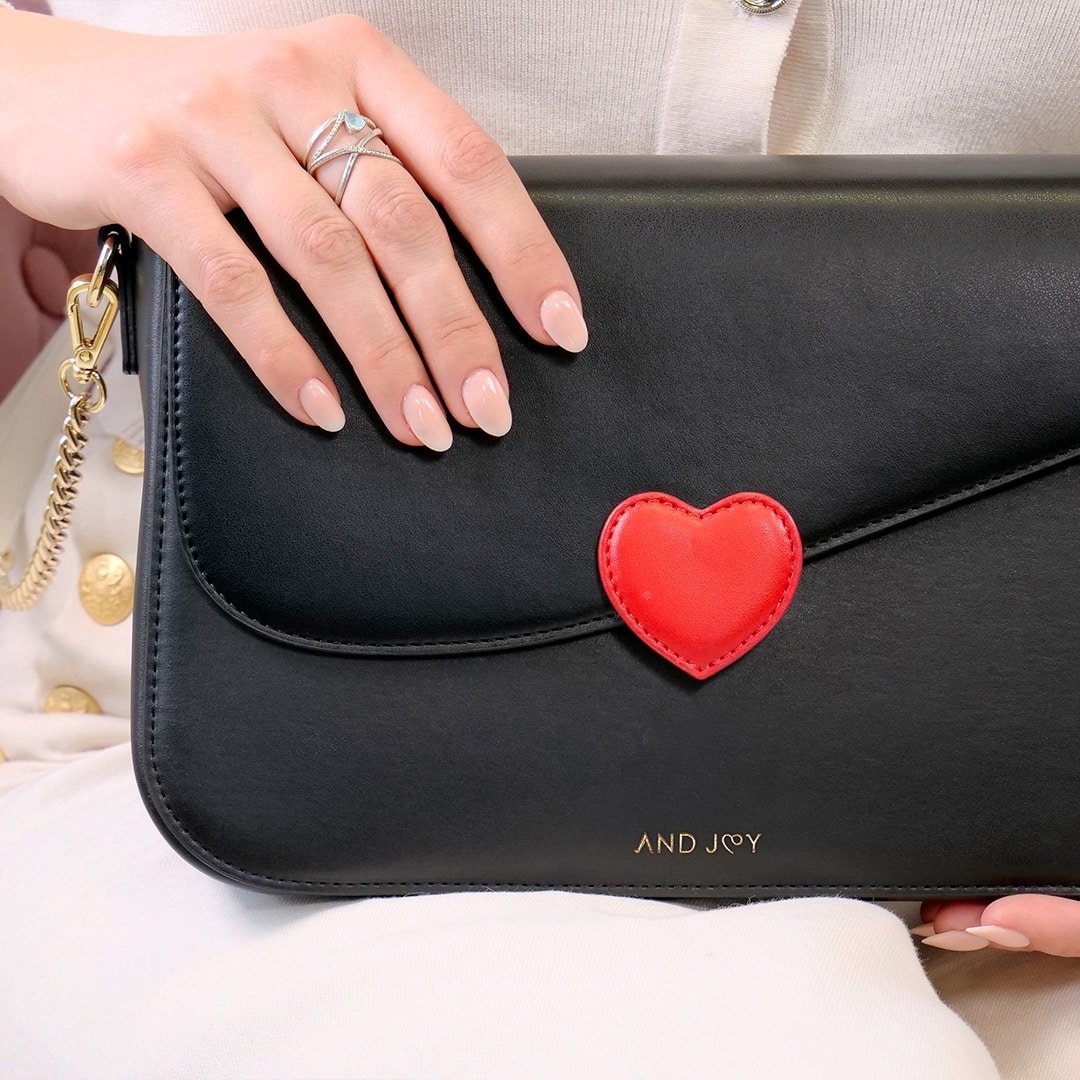
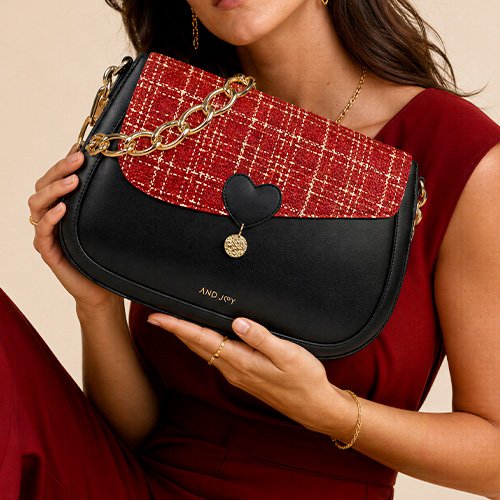
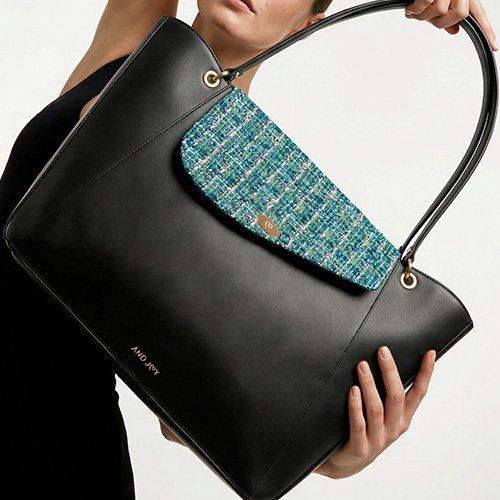
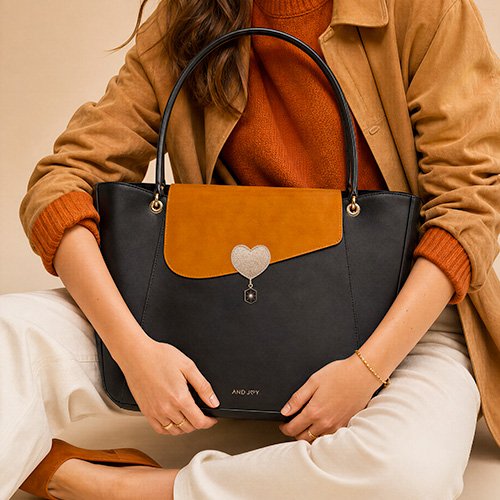
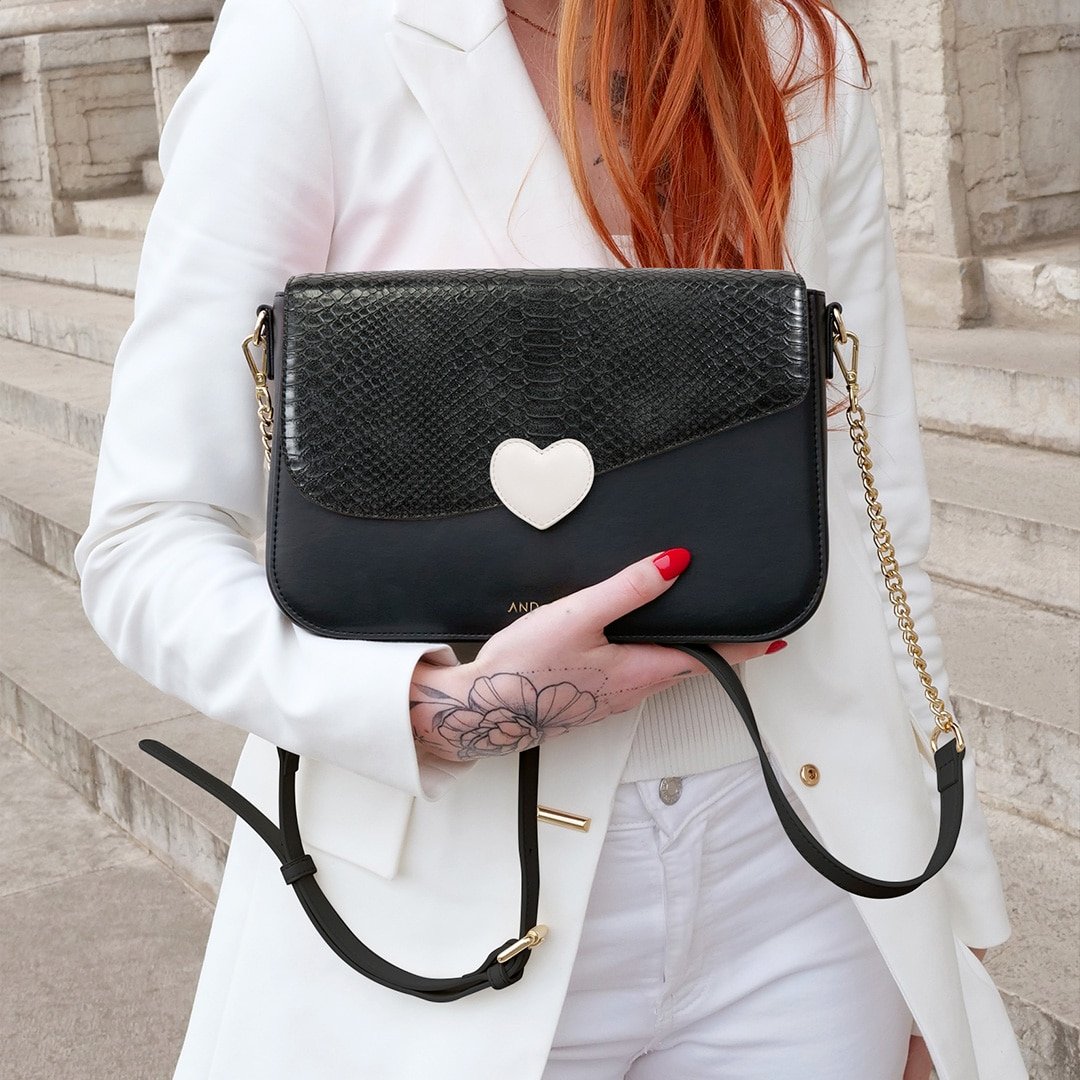
The interchangeable bag changes the game. By modifying certain elements—a strap, a flap, a clasp, a jewelry detail—you transform the bag's overall look without starting from scratch. The action is simple, but the effect is powerful. You keep a quality base and evolve its style according to your needs.
What's also appealing is the feeling of creating a more personal piece. A modular accessory doesn't feel like a standardized purchase. It tells more about your taste, your daily life, your way of combining colors, materials, and volumes. It becomes more than just a bag. It becomes a signature.
A good interchangeable bag isn't just trying to be pretty. It needs to remain cohesive over time. That's where modularity truly becomes interesting. A well-designed base allows you to change the bag's character without losing its initial elegance.
Imagine a minimalist look during the week with a solid flap and a simple strap. On the weekend, the same base accommodates a bolder shoulder strap, a trendier clasp, a charm that adds dimension. The bag hasn't changed in quality or structure, but it expresses something different. This flexibility brings a very modern form of stylistic comfort.
There's also a budget advantage not to be overlooked. Investing in a beautiful base and evolving it over time can be more sensible than accumulating entry-level bags that wear out quickly or become boring fast. Of course, it all depends on your habits. If you like to completely change the shape from one day to the next, modularity won't replace an entire collection. However, if you're looking for a strong piece that can vary without losing its identity, it's a particularly smart option.
Not all modular bags are created equal. The idea is appealing, but the execution needs to follow through. A good interchangeable system must be easy to handle, reliable over time, and visually harmonious. If changing an element takes ten minutes or throws off the bag's lines, the experience quickly loses its appeal.
The first thing to look at is the structure of the bag's body. It must be beautiful enough to stand alone, sturdy enough to withstand repeated changes, and timeless enough to accommodate multiple styles. A base that's too distinctive limits possibilities. A well-designed base, on the contrary, becomes an elegant playground.
The components matter as much as the base. A flap must fit perfectly. A strap must be comfortable and enhance the way it's carried. A clasp must be practical, but also provide a real visual presence. When each element is designed as a style piece in its own right, the whole gains in desirability.
Finally, the material makes all the difference. For this type of product, the promise cannot rely solely on the idea of change. It must also deliver on perceived quality, durability, and the pleasure of use. Premium recycled and vegan materials, a beautiful drape, meticulous manufacturing in Europe – these are concrete proofs, not just superficial arguments.
The best choice isn't necessarily the flashiest. It's the one that fits into your real life. Before thinking about combinations, ask yourself a simple question: what do you need daily? If you carry a laptop, a very trendy small size might only be for occasional use. If you travel light, a model that's too big will quickly feel cumbersome.
Then, think about how many styles you want to create around the same base. Some prefer a neutral palette, easy to wear with anything. Others like to alternate between a minimalist look and bolder touches. In both cases, it's better to start with a versatile base, then gradually add elements that expand the possibilities.
How you carry a bag is often underestimated. Yet, it completely changes your relationship with it. A shoulder strap offers freedom, carrying it on your shoulder enhances elegance, and a short handle can give a more structured look. A successful interchangeable model must allow for this adaptation without sacrificing comfort.
You also need to consider how often you like to change things up. If you enjoy frequent customization, choose an intuitive system designed for easy changes. If you're more consistent in your habits, opt for a few strong, well-chosen options. Modularity doesn't need to be excessive to be effective.
For a long time, the idea of a responsible bag sometimes suffered from an overly conservative image. Today, this opposition between desire and conviction is becoming less and less relevant. A woman who loves fashion doesn't have to sacrifice style to make a more ethical choice. And a beautiful bag has no reason to ignore sustainability issues.
The interchangeable bag precisely meets this expectation. It allows you to refresh your look without replacing the entire product. You consume differently, with more discernment and creativity. It's a logic of longevity, not saturation.
When this modularity is accompanied by non-animal materials, quality components, a design conceived in France, and manufacturing in Florence, the proposition becomes even stronger. Style remains central, but it's built on a serious foundation. This is what makes the experience both desirable and reassuring.
At And Joy, this vision takes a very concrete form: composing your bag according to your tastes, your uses, and your seasonal desires, without sacrificing elegance or material quality. The point isn't just to personalize. It's to create an accessory that truly reflects you.
A modular accessory naturally finds its place in a wardrobe that seeks balance between simplicity and expression. With a few well-cut clothes, easy-to-match colors, and one or two trendier pieces, it becomes a very useful anchor point. It structures your looks without making them rigid.
It's also an excellent choice if you like to buy less, but better. Instead of accumulating bags that serve similar functions, you build around an evolving piece. It's not the perfect solution for everyone. Some occasions still call for a mini evening bag or an extra-large tote. But for everyday use and most outings, modularity already covers many needs.
Finally, the pleasure shouldn't be minimized. Changing a detail, adjusting how it's carried, composing a new combination before going out: all of this contributes to the relationship you have with your accessories. Fashion becomes more vibrant, more personal, more free. And that's often where the pieces you truly keep are born.
Choosing an interchangeable bag means choosing a style that moves with you instead of restricting you. If an accessory is going to be with you for a long time, it might as well be able to evolve with you.





Offre de bienvenue
Laissez-nous votre email : −10 % pendant 30 minutes, même sur les lots déjà à −20 %.
En validant, vous acceptez de recevoir nos emails. Désinscription en un clic.
C'est fait !


