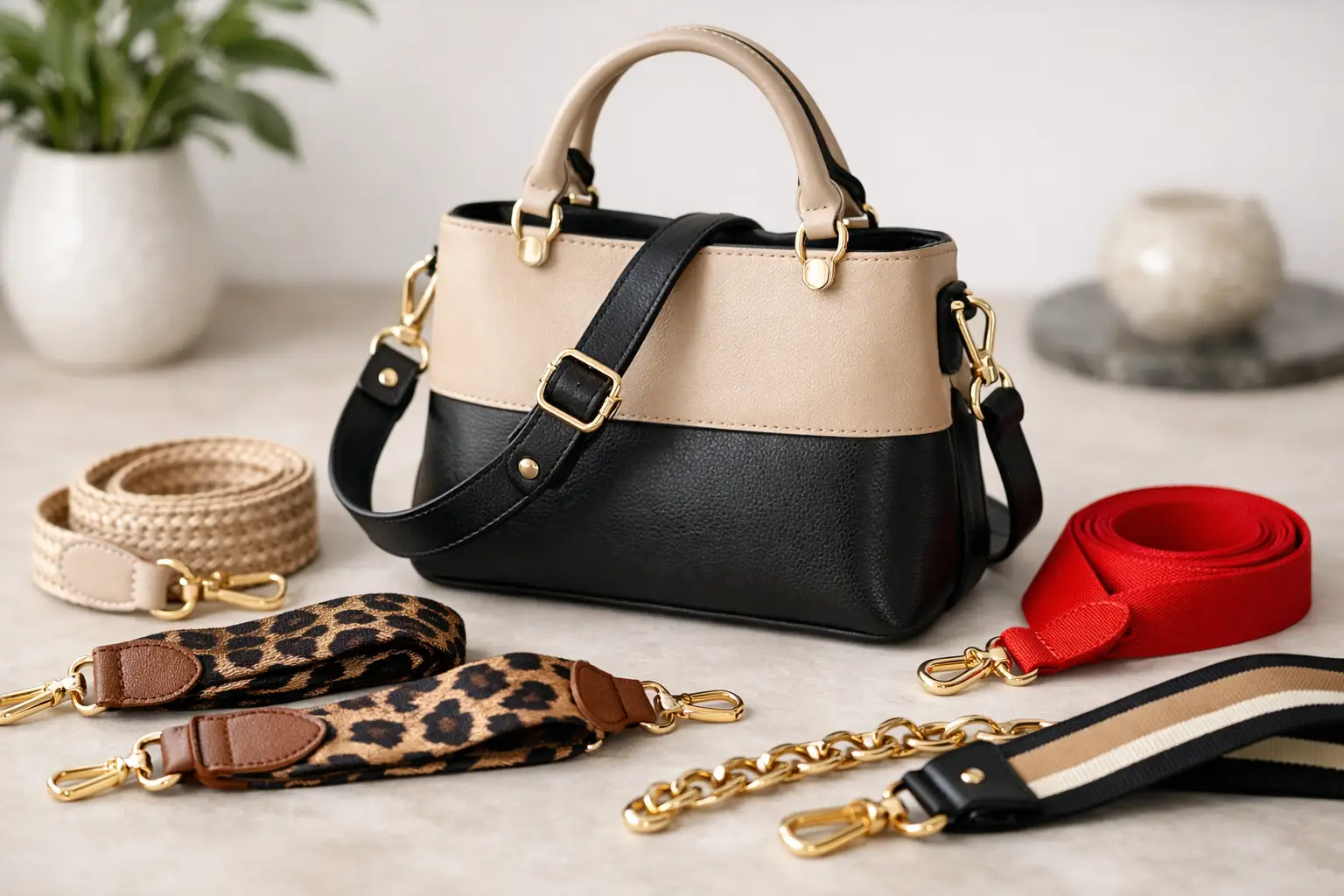
A bag can look stunning on a shelf and then disappoint the first time you take it out. Often, the problem isn't its design, but that one detail you feel with every step: a poorly suited strap. It's what changes how you carry it, your overall look, and, frankly, the joy of using your bag from morning till night.
We talk a lot about shape, color, flap, or clasp. Yet, the strap almost single-handedly dictates the bag's drape, its practicality, and its comfort level. Thin and elegant, it refines the silhouette. Wide and graphic, it makes a statement. Adjustable, it adapts to your long days. Removable, it especially opens up a new idea of style: a bag that evolves with you, without requiring you to change it entirely.
A fixed strap dictates only one way to live with your bag. A removable strap, however, leaves room for your desires. You can switch from a shoulder carry to a crossbody, lighten up a dressy outfit with a more fashionable strap, or conversely, tone down a bold look with a more understated finish. The same bag takes on a different character in seconds.
It's also a real choice for durability. Instead of multiplying models to suit every use, you build around a base you already love. A shorter strap for the office, a more comfortable one for travel, a bolder one for the weekend or evening: your style renews itself without a systematic replacement logic. More than a bag, it's a choice.
Finally, there's a very practical dimension. When a strap wears out, gets marked, or no longer suits your habits, being able to replace it naturally extends the life of the bag. It's subtle, but decisive.
The right choice depends less on current trends than on your actual way of carrying your bags. A woman who walks a lot, uses public transport, or goes between appointments won't expect the same thing as someone who prefers occasional use or dressier styles. Style matters, of course. Comfort does too. And one shouldn't sacrifice the other.
A thin strap has immediate elegance. It works very well on small or medium-sized bags, lending a more delicate, dressier look. However, on a loaded bag or one carried for a long time, it can quickly become less comfortable, especially when worn crossbody.
Conversely, a wider strap distributes weight better and often gives a more contemporary feel. It's particularly suitable for active days and for those who like a visible accessory. The compromise therefore depends on your bag's size and how you use it. If you only carry the essentials, a thin strap might suffice. If your bag accompanies you all day, a more generous width will often make a difference.
A beautiful, poorly proportioned strap can ruin the experience. Too short, the bag rides up and hinders movement. Too long, it loses its appeal and becomes less practical. The right length depends on your height, your body type, the coat you wear in winter, and how you like your bag to hang.
Adjustability is therefore a real plus, not a gimmick. It allows you to adapt the carry according to the season, your clothes, and the time of day. An adjustable and removable strap often remains the most flexible solution for those who want a bag capable of keeping up with multiple lifestyles.
You hardly notice them, until the day they disappoint. Carabiners, rings, metal finishes: everything must inspire confidence. A beautiful strap is only useful if its attachment is stable, smooth, and reassuring to use.
The key here is the balance between aesthetics and solidity. Attachments that are too light can weaken the whole. Very imposing pieces can visually weigh down a refined bag. The ideal remains a clean, durable finish that's pleasant to handle and consistent with the bag's design.
A strap isn't just for carrying. It expresses something. Its material, feel, and finish set the tone at first glance.
A smooth, structured material gives a dressier feel. It easily complements office wear, a straight coat, a flowing dress, or a well-tailored blazer. A textile strap, depending on its weave and pattern, can give a more casual, urban, or sometimes more graphic vibe. It often has the advantage of comfort, especially when worn crossbody.
The choice, again, depends on what you expect from the bag. If you want a very versatile piece, it's better to aim for a strap that can complement several outfits without overpowering them. If you like an accessory to immediately define your silhouette, a contrasting, textured, or visually stronger strap can become the focal point of your look.
For a brand like And Joy, this logic makes perfect sense: to make every component a field of expression, without sacrificing quality or overall coherence.
This is where the benefit becomes almost obvious. In the morning, you head out with a comfortable strap, adjusted to keep your hands free. In the evening, you swap that version for a shorter, chicer strap, and the bag immediately changes its attitude. The core remains the same, the effect is completely different.
This modularity is appealing because it responds to real life. You don't want a bag for every hour of the day, nor do you want to overconsume just to get a little novelty. You want to be able to adapt, adjust, and evolve. A removable strap allows for this with almost obvious simplicity.
It's also a more personal way to build your style. Some like very understated bags, then add a strong touch with the strap. Others prefer an already expressive bag body and choose a more discreet strap to balance the overall look. There isn't one right answer. There's your perfect match.
The first is to buy solely with your eyes. A strap that looks great in a photo might turn out to be too stiff, too short, or uncomfortable to wear. The look matters, but the feel when worn matters just as much.
The second mistake is to ignore the weight of the bag once it's filled. There's a different demand between a mini evening bag and a day bag with a wallet, phone, glasses, notebook, and makeup pouch. A strap that suits one won't necessarily suit the other.
The third, more subtle, is forgetting the consistency of the finishes. If your bag has gold hardware, a strap with very different hardware can create visual dissonance. It's not necessarily forbidden, but it should be a deliberate style choice, not something you just put up with.
For everyday use, it's best to prioritize a comfortable, adjustable, and easy-to-match strap. Neutral colors, clean finishes, and an intermediate width often offer the most freedom.
For a more fashionable silhouette, a more distinctive strap can be enough to transform a classic bag into a signature piece. This is particularly interesting if you like to evolve your looks without starting from scratch.
For evenings or dressier occasions, a thinner, shorter, or more discreet strap keeps the bag close to the body and adds more polish. The only real point of caution remains comfort if you plan to wear it for a long time.
A successful removable handbag strap isn't just pretty at the time of purchase. It remains comfortable, reliable, and desirable after weeks of use. It's easy to remove, stays securely in place, doesn't clash with your favorite pieces, and makes you want to carry the same bag in a different way again and again.
This is probably what true luxury means today: accessories that keep up with your multiple lives, respect your beliefs, and make style freer instead of rigid. If you're hesitating between several options, ask yourself a simple question: will this strap merely complete my bag, or will it truly take it further?